Updated
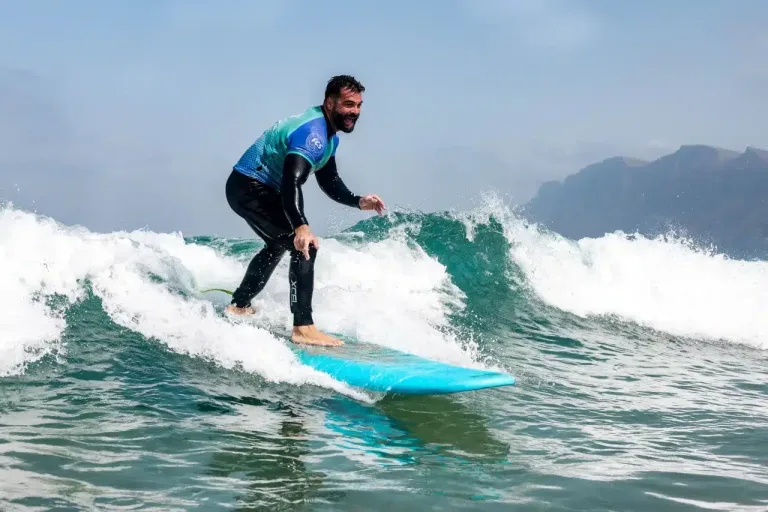
Somewhere in early November the light changes in Famara. The trade winds that blew all summer ease off, the first big Atlantic swells arrive, and the beach that was full of August foamies turns into a long, clean, glassy playground with almost nobody on it. This is when the people who run surf schools here go surfing themselves. Here is why winter is the best season to learn and to surf in Lanzarote — with the real numbers on water, wetsuits and waves.
Water and air temperature by season
The question everyone asks first. Lanzarote sits at the latitude of the Sahara, and the ocean around it never drops below the high teens. That is the single fact that makes winter surfing here possible in a normal wetsuit, with no boots, gloves or hood.
| Months | Air (day) | Water | Wetsuit |
|---|---|---|---|
| Dec–Feb | 17–21 °C | 18–19 °C | 3/2 full suit |
| Mar–Apr | 19–23 °C | 18–19 °C | 3/2 full suit |
| May–Jun | 21–25 °C | 19–21 °C | 3/2 or 2 mm spring |
| Jul–Sep | 24–29 °C | 21–23 °C | 2 mm spring / lycra |
| Oct–Nov | 21–25 °C | 21–22 °C | 3/2 or 2 mm spring |
For comparison: the Atlantic coast of France or northern Spain is 11–13 °C in February, with a 5/4 suit, boots and a hood. Here you surf in a 3/2 and walk back to the village in a T-shirt. The coldest weeks are late January and February, and even then the days are usually 18–20 °C and sunny.
1. The waves are the best of the year
Lanzarote is the most northeasterly of the Canaries, first in line for the low-pressure systems that roll across the North Atlantic between October and March. Those systems send long-period northwest swell straight into the north coast, and that is winter surfing here: consistent, powerful, well-organised waves, day after day, often with light or offshore wind in the morning because the summer trades have gone.
For beginners this is better than it sounds. Famara is a six-kilometre beach break with a gentle gradient; a big winter swell doesn’t make it a death trap, it makes the inside whitewater longer and more reliable, and the instructors move the lesson along the beach or to a sheltered corner to match the size. For intermediates it is the season to ride real green waves, and for the experienced the reefs of the north shore — La Santa, El Quemao, the peaks around Famara itself — are firing. Our Lanzarote surf guide covers which spot works on which swell and tide.

2. The weather actually holds
The “eternal spring” line is a cliché because it is true. Lanzarote gets about 16 rainy days a year, almost all of them short showers in winter, and over 3,000 hours of sunshine. What changes in winter is not the sun, it is the wind: the strong afternoon trade winds of July and August are gone, so the water stays clean for longer and the beach is a pleasant place to sit after a session. Check the Famara webcam any January morning and you will see what we mean.

3. Fewer people, same school
Winter is low season for mainland tourism, but not for surfing — and that difference is exactly what you want. The beach is quieter, the line-up at Famara has room, restaurants in the village have tables, and prices for flights and accommodation are at their lowest outside the Christmas and New Year weeks. Meanwhile everything a surfer needs runs year-round: we teach every day of the year except two or three, the surf camp runs every week, the rental shop is open and the boards get fresh wax. Nothing closes.
4. It’s a better place to learn than to survive
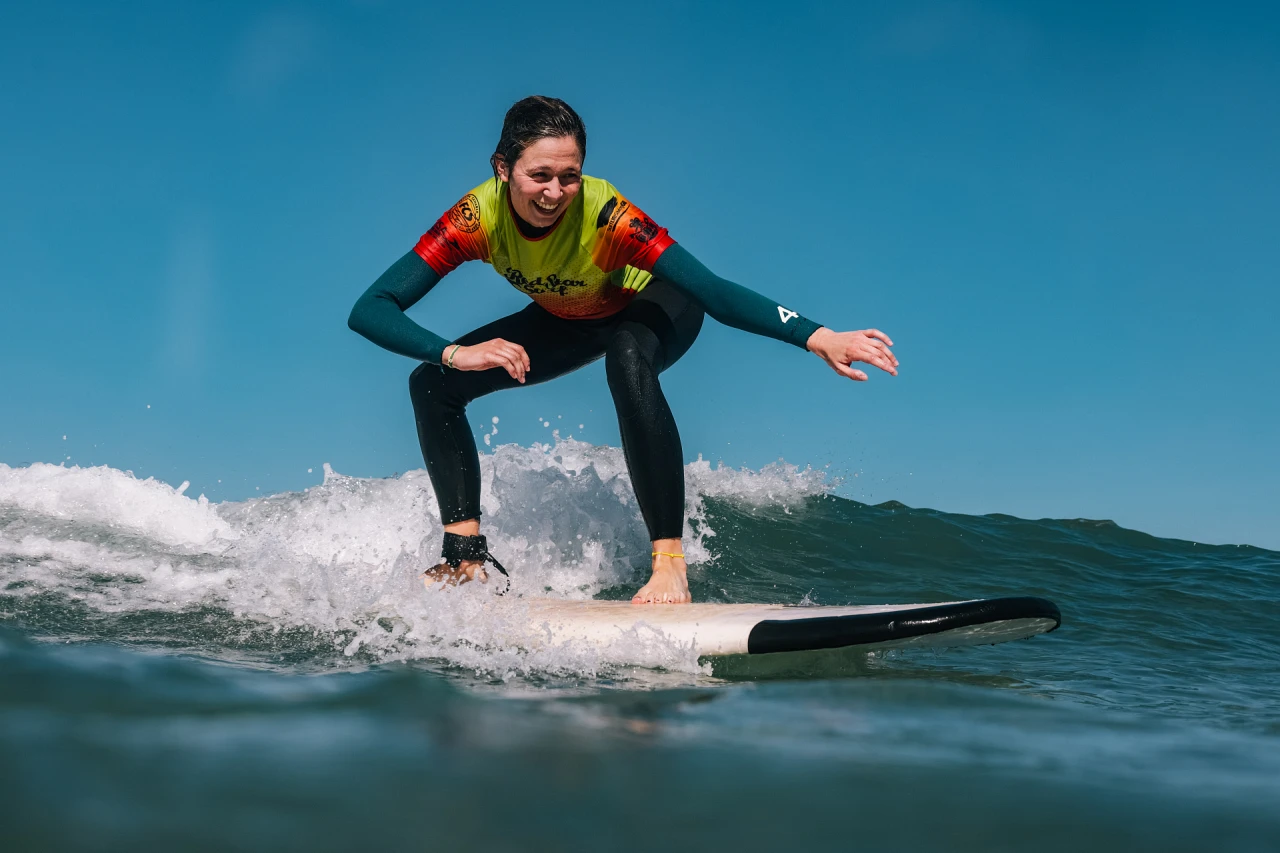
If you have tried to learn on a cold coast in winter you know the problem: numb hands, a heavy suit, twenty minutes of shivering before the first wave. Learning is slow when your body is busy staying warm. In Lanzarote you can spend two hours in the water in February and think about your take-off, not your fingers — which is why people who took a winter course here usually stand up in their first lesson. We wrote about that movement in detail: how to take off on a surfboard.
5. A week away that resets the year
There is also the part that has nothing to do with wave height. A week of surfing in January — up at eight, in the water by ten, lunch in the sun, a walk on the beach at sunset (this one, ideally), asleep by eleven — does something to a European winter that a gym membership never will. Guests tell us every year that the trip was the point in the winter when things turned around. We are not doctors, but we have watched it happen for fifteen years.
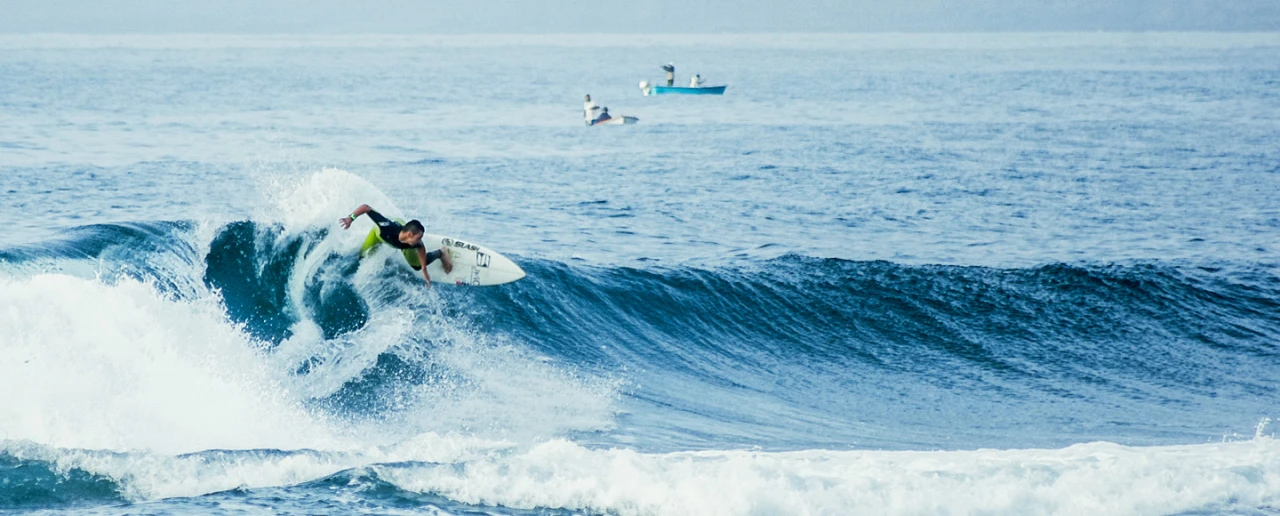
Winter surf questions we get asked
Do I need a wetsuit to surf in Lanzarote in winter?
Yes, a 3/2 mm full wetsuit, which is included in every lesson and in the rental price. No boots, gloves or hood — the water is 18–19 °C.
Is winter too big for beginners?
No. Famara is a long sandy beach break; on big days lessons move to the sheltered corner or to the inside whitewater, which is what beginners ride anyway. The instructors pick the spot each morning by size and tide.
What is the best month to surf in Lanzarote?
October to March for the most consistent swell and clean conditions; September–October and March–April are the sweet spot with warm water, good waves and light winds. Summer is smaller and windier but never flat.
Does it rain a lot in winter?
No. Lanzarote is one of the driest places in Europe — a handful of short showers per winter month, and the sun is back within the hour.