Updated

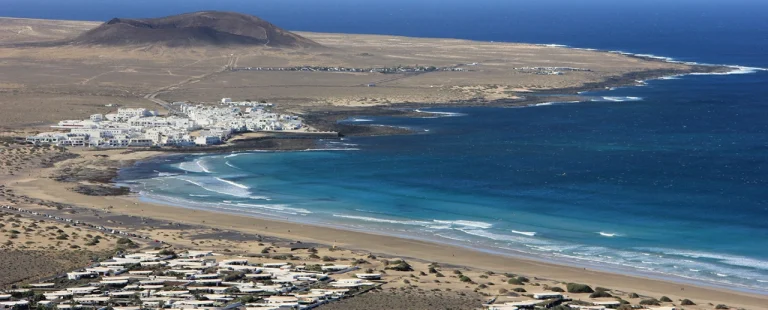
Ask surfers who have travelled Europe where you can learn in warm water in January, ride a clean wave in August and never wait a week for swell, and the same name comes up: Famara. A six-kilometre beach under a 600-metre cliff on the north coast of Lanzarote, with a fishing village of eight hundred people at one end and nothing but sand and ocean at the other. Here is why this place, rather than Portugal, France or the Basque Country, is where we would send someone who wants to surf every day of their trip — and what a week here actually looks like.
The wave: a beach break that works all year
Famara faces northwest into the open Atlantic and catches every swell that crosses it. In winter that means the long-period groundswells of the North Atlantic lows; in summer the smaller but daily waves pushed by the trade winds. The result is the most consistent beach on the Canaries: flat days are counted in single digits per year. Because the beach is so long and its gradient so gentle, the same swell produces several different waves along it — a fast peak in front of the village, slower and longer walls further along, a sheltered corner under the cliff — so whatever the size, there is a section for your level.
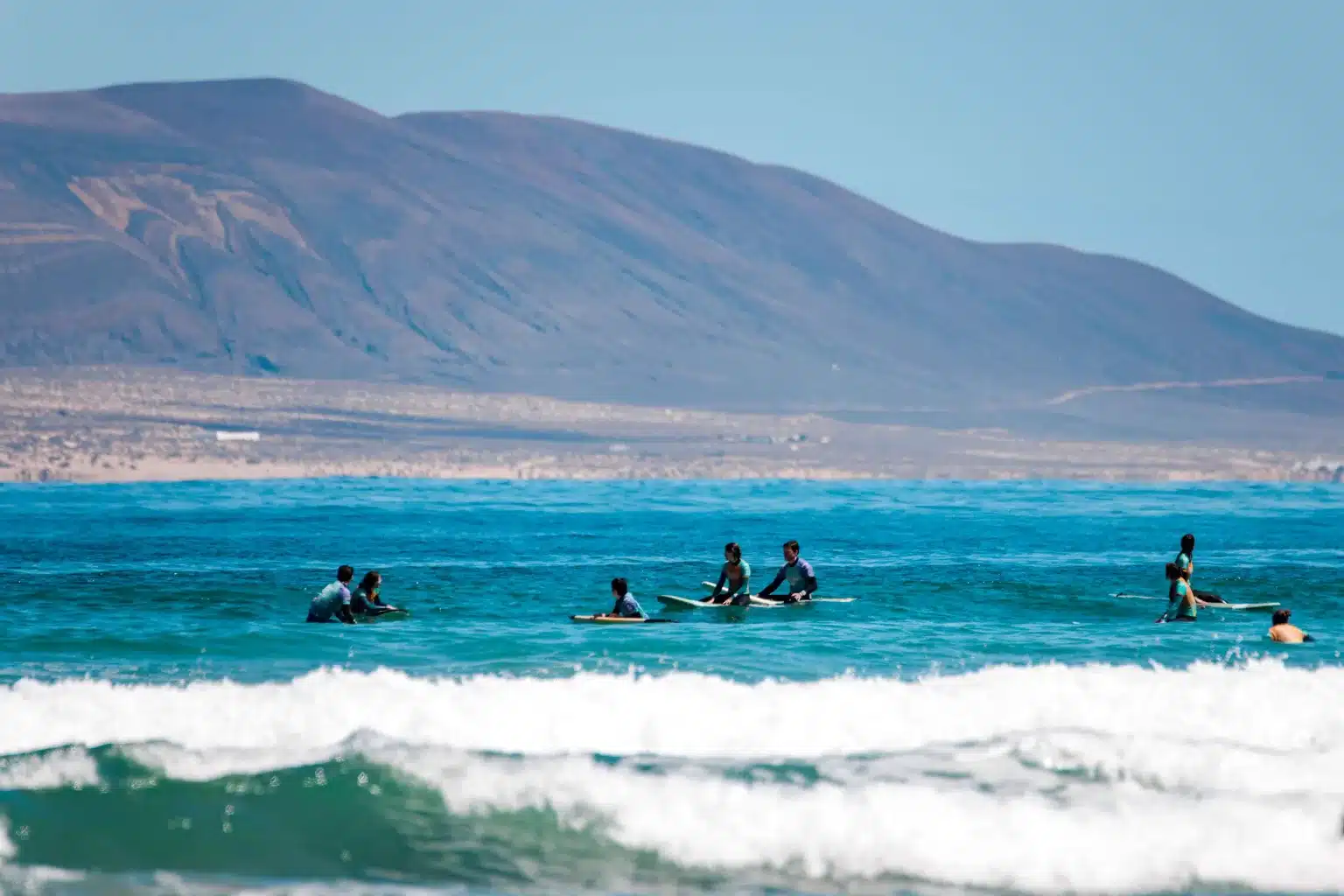
It is a sand-bottom beach break, which is the whole reason it is a learning beach and not just a good wave. Falls cost nothing, the whitewater rolls for fifty metres or more, and a beginner can stand up on day one while an intermediate rides green waves two hundred metres away. The reefs that made Lanzarote famous in the surf press — La Santa, El Quemao, San Juan — are fifteen minutes up the coast for when you are ready. Our Famara spot guide covers tides, banks and the wind by hour; the live webcam shows you what it looks like right now.
The numbers: Famara against the rest of Europe
The reason people fly four hours past France and Portugal to surf here is not that the wave is better — it is that the season never ends. Compare a February trip:
| Famara, Lanzarote | Hossegor, France | Ericeira, Portugal | Zarautz, Spain | |
|---|---|---|---|---|
| Water in February | 18–19 °C | 11–12 °C | 14–15 °C | 12–13 °C |
| Wetsuit in February | 3/2 mm | 5/4 + boots, hood | 4/3 + boots | 5/4 + boots |
| Sunshine hours / year | ≈3,000 | ≈2,000 | ≈2,800 | ≈1,800 |
| Rainy days / year | ≈16 | ≈120 | ≈75 | ≈140 |
| Air in February (day) | 17–21 °C | 8–12 °C | 13–16 °C | 9–13 °C |
| Flat days / year | a handful | dozens (summer) | some | dozens (summer) |
In summer the comparison flips the other way: the European mainland has warm water and small waves, Famara has 21–23 °C water and still gets a daily wave from the trade-wind swell, with light wind in the mornings. We put the month-by-month numbers in why winter is the best season to surf in Lanzarote. The short version: there is no month you should not come.
The village: Caleta de Famara
At the eastern end of the beach sits Caleta de Famara — sandy streets, low white houses, one supermarket, a bakery, a dozen restaurants and half a dozen surf schools. There is no hotel: people stay in apartments, surf houses and small guesthouses, most of them a few minutes’ walk from the sand. The whole area is inside the Chinijo Archipelago Natural Park, so there are no resorts and nothing taller than two floors, and the beach at the far end is as empty on a Saturday in August as it is in January.
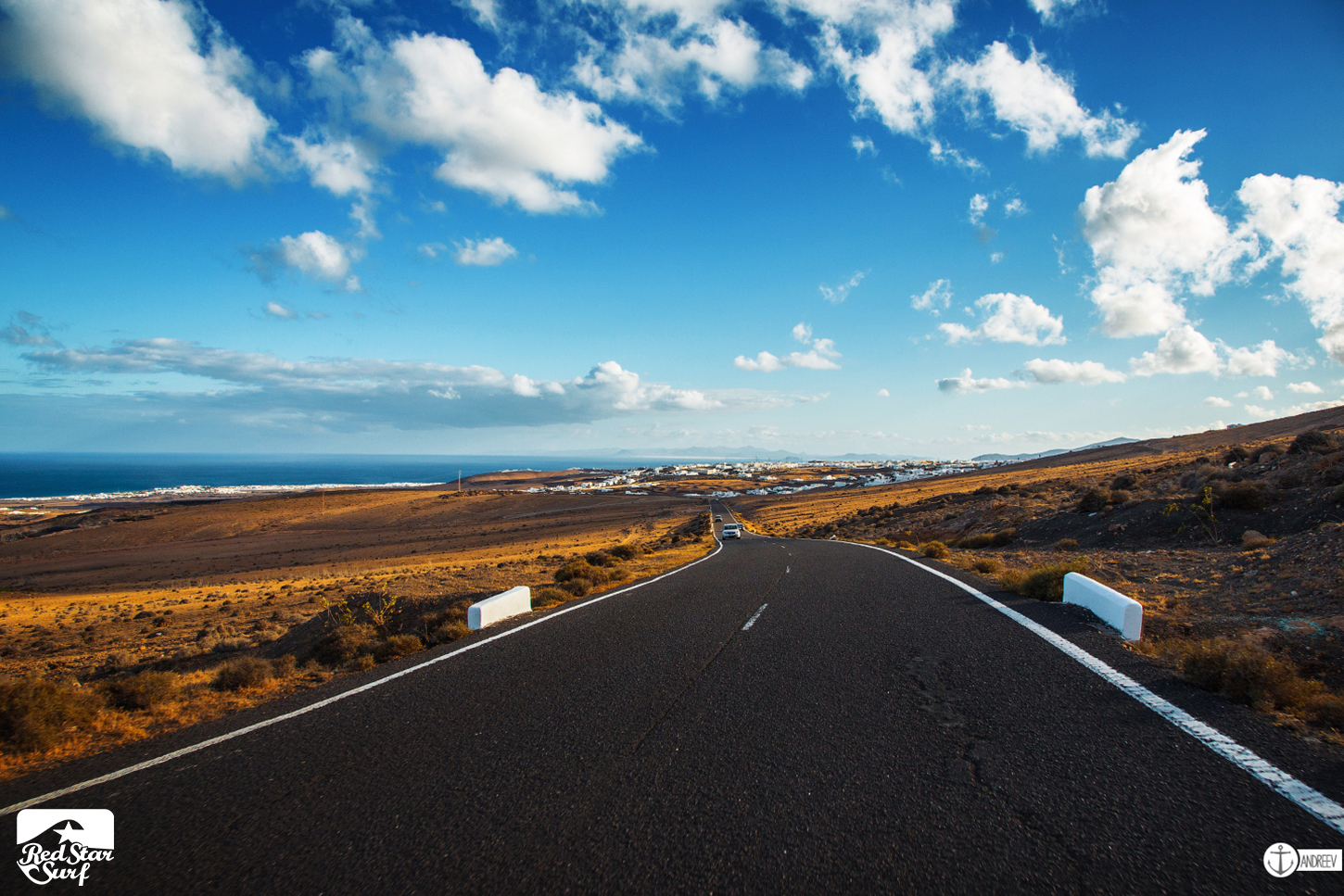
This is where our team lives and teaches, and where the surf house and apartments for camp guests are. The village is thirty-five minutes from the airport, twenty from Teguise and forty from the beaches of the east coast, which matters on the two or three days a year when Famara is too big and the lesson moves to a more sheltered beach.

Who Famara is for
Beginners, first of all: roughly seven in ten of the people who take a lesson with us have never stood on a board, and most of them do in their first two hours. Intermediates, because the outside peaks give long green walls to practise turns on without the crowd or the rocks of a reef. Families, because the same beach works for a nine-year-old on a foamie and a parent on a longboard, and because the village is safe, small and slow. Experienced surfers use Famara as a base — an easy morning session here, then La Santa or the west coast in the afternoon when the tide is right. It is not the place for someone whose only goal is a barrel; that is fifteen minutes away and our Lanzarote surf guide tells you where.
Getting here and getting around
Lanzarote has direct flights from most of Europe in two to four hours, year-round, and the airport is thirty-five minutes from Famara by car. A hire car is useful but not necessary if you are staying in the village: the beach, the school, the shops and the restaurants are all on foot, and a bus connects Famara with Teguise and Arrecife a few times a day. We don’t offer airport transfers: a taxi takes about 25–35 minutes (€35–40), or you can rent a car. The one thing to know is that Famara is on the north coast and the resorts are on the south — if you book a hotel in Puerto del Carmen and plan to surf every day, you will spend an hour a day in the car. Stay in the village.
The honest downsides
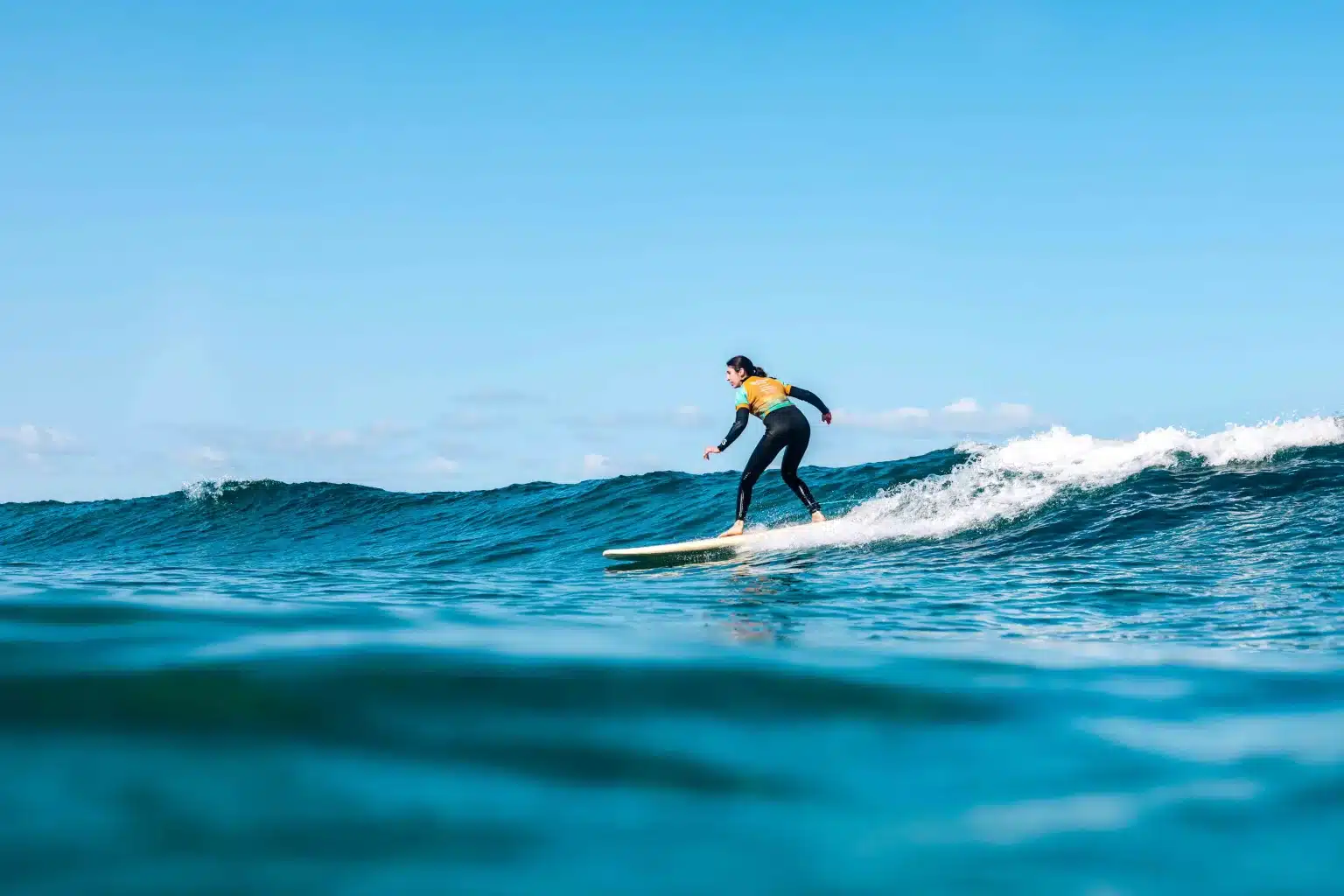
Famara is windy in the afternoons from June to September — that is the trade wind, and it is why lessons run in the morning and why the same wind makes the beach one of Europe’s best for kitesurfing. The water in winter is cool enough to need a full wetsuit, not tropical. The village is quiet after ten at night. And on the biggest winter days the beach closes out and the lesson drives to the east coast. If you want nightlife, a pool and a lazy shorebreak, this is the wrong beach. If you want to surf every day, it is the right one.

Famara — the questions we get
Is Famara good for beginners?
Yes — it is the beginner beach of the Canaries. Six kilometres of sand-bottom beach break with a gentle slope, long whitewater and waves every day, so lessons always find a section the right size. Most first-timers stand up in their first two-hour lesson.
What is the best time of year to surf in Famara?
There is no bad month. October to March has the biggest, cleanest swells and the emptiest beach; April–June and September–October are the sweet spot of warm water, good waves and light wind; July and August are smaller, warmer and windier in the afternoons, so sessions are in the morning.
How far is Famara from Lanzarote airport?
About 25–35 minutes by car (30 km). We don’t offer airport transfers: a taxi takes about 25 minutes (€35–40), or you can rent a car. A bus runs a few times a day via Teguise; a hire car is useful for exploring but not needed if you stay in the village.
Where do you stay in Famara?
There is no hotel — the village has apartments, surf houses and small guesthouses, most within a five-minute walk of the beach. Red Star Surf has its own surf house and apartments for lesson and camp guests.