Updated
We live in Caleta de Famara, on the north-west coast of Lanzarote, and every week we meet people who came for the sun and leave talking about something else — the volcanoes, the silence, the food, the light at sunset. Here are the five reasons we would give a friend who asked whether Lanzarote is worth it.
1. A landscape you will not see anywhere else in Europe
Lanzarote is a young volcanic island, and it shows. In the 1730s a series of eruptions buried a quarter of it under lava, and what they left is now Timanfaya National Park: a field of red and black craters where the ground is still hot a few metres down. Add the green lagoon of El Golfo, the cliffs of Famara, the lava tubes of Cueva de los Verdes and Jameos del Agua, and white villages set against black earth. The whole island has been a UNESCO Biosphere Reserve since 1993, largely thanks to the artist César Manrique, who fought to keep high-rise building off it. We keep a full list of places with practical tips in things to do in Lanzarote.

2. Sun and mild temperatures all year
This is the reason most people give first, and it holds up. Winter days are usually around 20–22 °C, summer is warm but tempered by the trade wind, and rain is rare. The sea stays between about 18 and 23 °C. For northern Europeans that means a four-hour flight to real outdoor days in January — which is why the island is busiest from October to April. More on the island’s climate and how to get here in our guide to visiting Lanzarote.
3. Waves and wind for every level
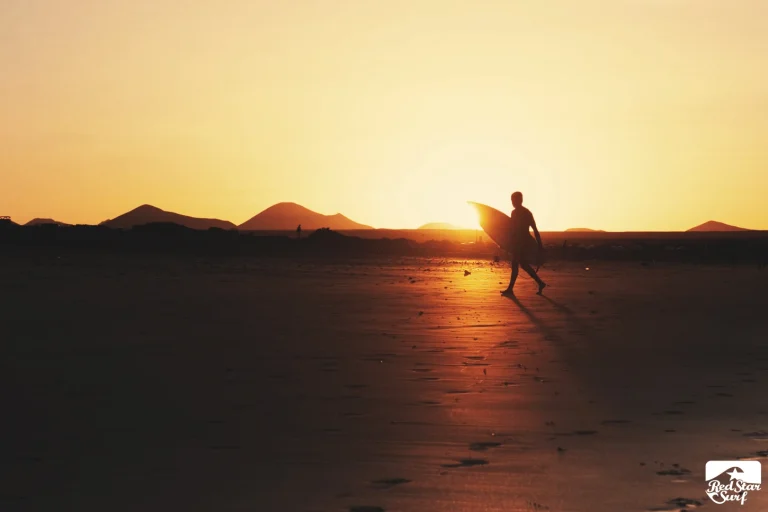
Lanzarote has some of the most powerful reef waves in Europe on its north-west coast, and they are for experts. It also has Famara: six kilometres of sandy beach break that is one of the best places in Europe to learn to surf. From spring to autumn the trade wind turns the same beach into a kitesurfing spot. If you are curious, read why Lanzarote is perfect for learning to surf, look at our beginner surf lessons or our kitesurf lessons in Famara. Even if you never stand on a board, watching the surfers at sunset from the beach is a fine way to end the day.

4. Simple, honest island food
Canarian cooking is not fancy, and that is the point. Start with papas arrugadas — small potatoes boiled in salty water — with red and green mojo sauces, fried gueldes (tiny fish), grilled limpets and a plate of local goat’s cheese. Main courses are mostly fresh fish of the day, sancocho (salted fish with potatoes and sweet potato) or, inland, goat and rabbit stews. For dessert, bienmesabe (almond and honey) and frangollo. Wash it down with a dry Malvasía from La Geria, the volcanic wine region in the centre of the island — we wrote about the wine route through La Geria separately. Our guide to Lanzarote food and drinks has the rest, including where we eat in Famara.

5. Village life and real fiestas
Away from the resorts on the south coast, Lanzarote is a place of small towns that still celebrate their saints. Carnival, usually in February, fills Arrecife and the villages with costumes and street parties. In summer the fishing towns honour the Virgen del Carmen with boat processions, Arrecife celebrates San Ginés in August, and in September the island gathers at Mancha Blanca for the Virgen de los Dolores, the patron saint of Lanzarote, with a big craft fair. If you want to support the island while you are here, the simplest way is to eat, shop and book locally — and to leave an honest review for the small places you liked.

How to fit it all in
A week is enough to see the island without rushing: mornings in the water, afternoons exploring, one full day for Timanfaya and El Golfo, one for the north (Jameos, Cueva de los Verdes, Mirador del Río). We put together a short list of the best plans in Lanzarote for rest days, and the best places to watch the sunset. If you want to base yourself in Famara, see our accommodation in Caleta de Famara or a surf camp week.
Visiting Lanzarote — FAQ
Is Lanzarote worth visiting?
Yes, especially if you like nature and the outdoors. The volcanic landscape of Timanfaya, César Manrique’s architecture, year-round mild weather and some of the best surfing in Europe make it very different from the other Canary Islands.
When is the best time to visit Lanzarote?
Any time of year. October to April brings warm winter days and the most consistent waves; summer is hotter and windier, which suits kitesurfing and the beach.
How many days do you need in Lanzarote?
Five to seven days lets you see Timanfaya, the north of the island and La Geria while still having time for the beach or a surf course.
What is Lanzarote famous for?
Its volcanic landscapes and Timanfaya National Park, the work of artist César Manrique, the vineyards of La Geria and the surf at Famara.