Updated

Kitesurfing looks like something you need years for. It is not. Most people who start with a proper course in Famara are riding short distances on the board by the end of their first week — and the reason is less about talent than about the place you learn in: a six-kilometre sandy beach, a steady side-onshore wind and instructors who wear the same helmet you do. Here is what learning actually involves, how long it really takes, what it costs, and the honest bit about wind that most schools leave out.
Why Famara is a good place to learn
The beach is long, wide and sandy, with no rocks and no reef, and a large section at the far end is reserved for kiters — kiting is not allowed from the village up to and in front of the Famara Bungalows, so the kite zone begins beyond them and you are never setting up among swimmers and surf lessons. The prevailing wind is northwest, which on this coast means side-onshore: it pushes you gently back towards the sand instead of out to sea, which is exactly what you want while you are still learning to stay upwind. Our guide to kitesurfing in Famara explains the geometry of the spot in detail.
How long does it take to learn? Day by day
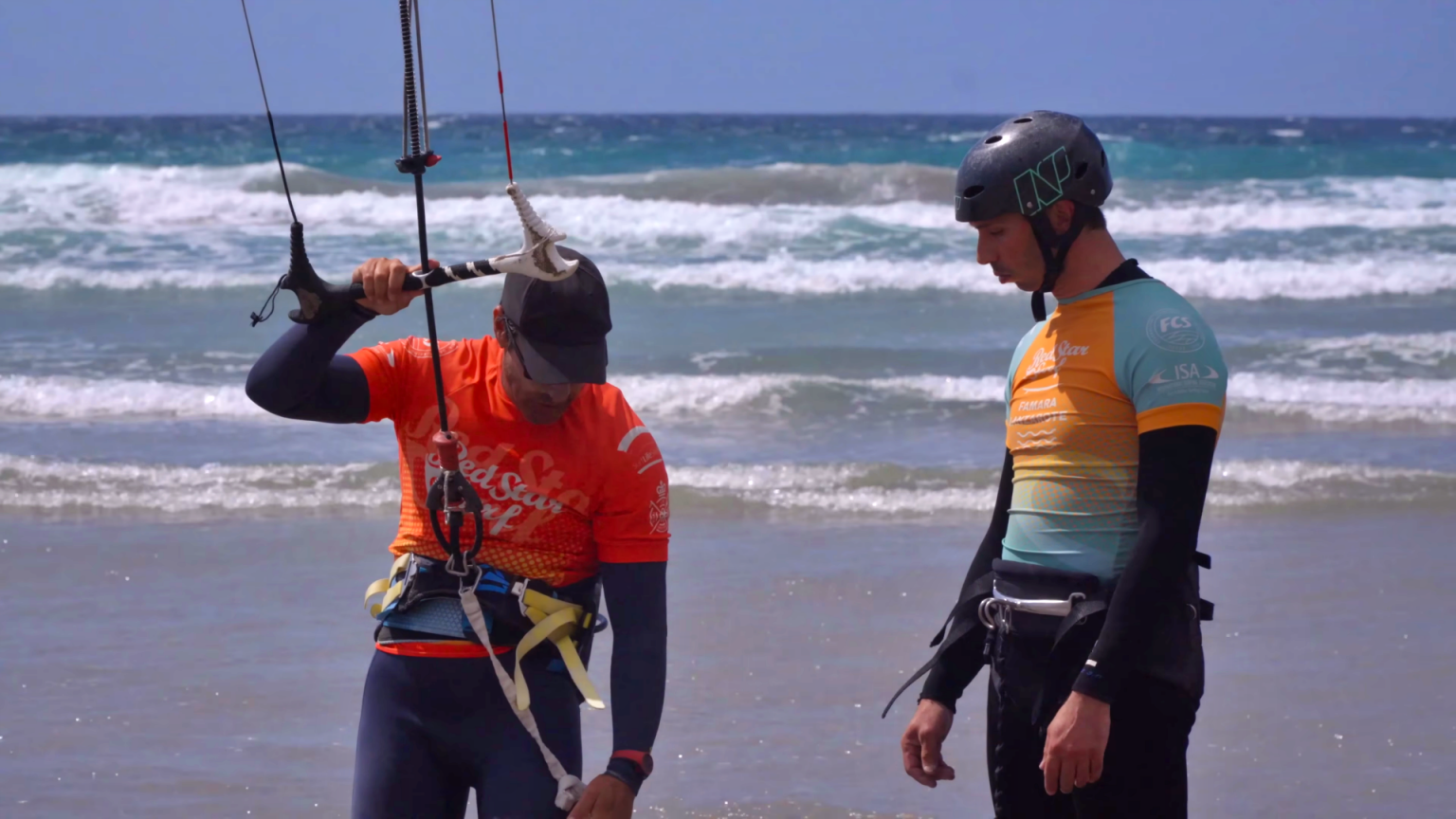
Every course is different because every week of wind is different, but the progression is always the same three steps. Nobody touches a board until they can fly the kite without thinking about it.
| Stage | What you do | Typical time |
|---|---|---|
| Kite control on the sand | safety systems, the wind window, launching and landing, first flights with a trainer or small kite | day 1 |
| Into the water | body drags downwind and upwind, water relaunch, self-rescue, board recovery | day 2 |
| First rides | kite and board together, water start, short runs, stopping and right-of-way | days 3–5 |
| Independent | riding upwind, turning, riding back to where you started | after 5+ days of real wind |
How fast you move through it depends on your fitness, your nerve and — above all — the number of good wind days you get. Five days of lessons spread over a two-week stay usually beats five days crammed into a week of marginal wind. We recommend a rest day after three to five days in a row; kiting uses your legs and core more than your arms, and a tired body learns slowly.
How a lesson works in practice
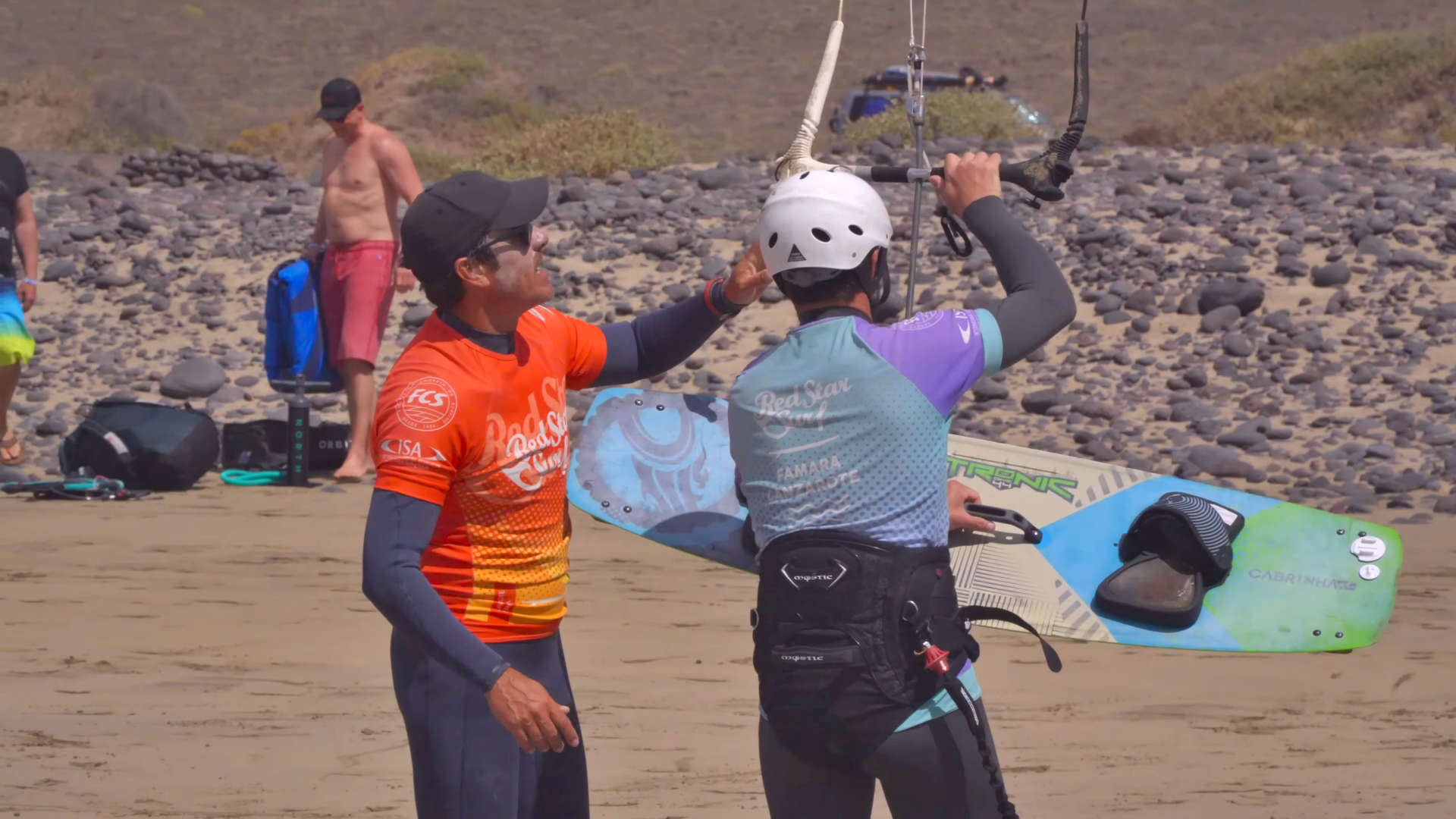
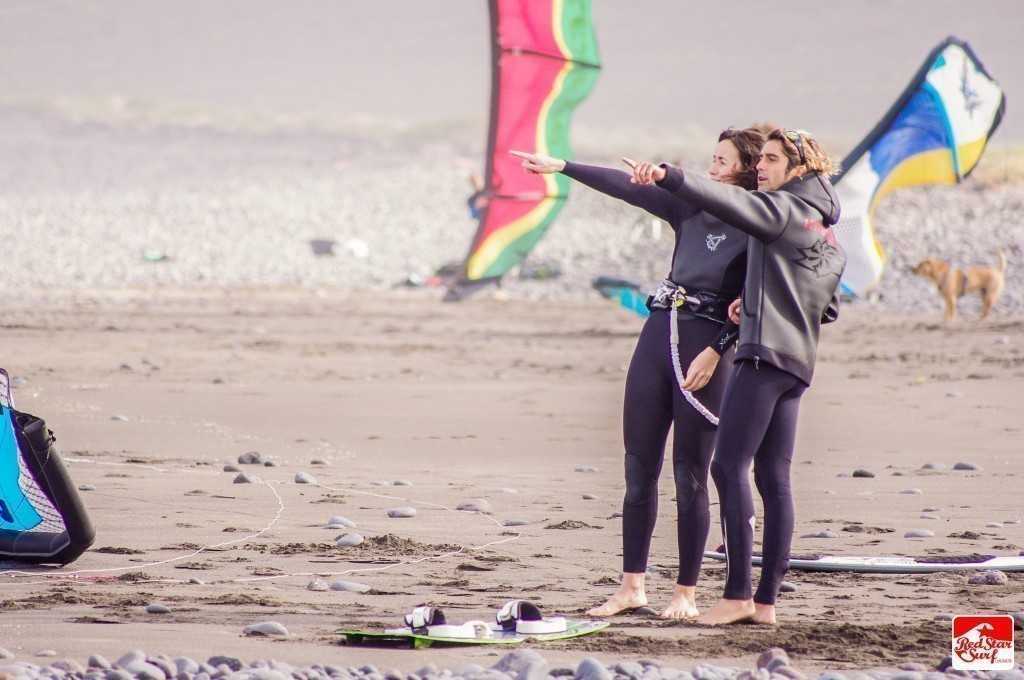
Kite lessons do not run at a fixed time like surf lessons. Wind and tide have to line up in the same few hours — low tide gives the most sand to set up on and the flattest water inside — so the time moves every day and we confirm it the day before. You usually meet your instructor at the shop in the village to talk through your level and pick up a wetsuit and helmet, and then drive together to the kite zone. If the instructor is already teaching on the beach, you collect the wetsuit at the shop and meet them in the kite zone at the agreed time. You always use the school’s equipment: kite, bar, harness, board, wetsuit, helmet and impact vest are all included.
What it costs
A group kite course is three hours of kiting a day from €150 per day, with multi-day discounts applied automatically when you book several days. Private 1:1 coaching starts from €190 and a semi-private lesson for two from €290 — private is the fastest way to progress, because every minute of good wind is yours. Transfer to the spot of the day, all gear, medical insurance and a certificate after a course of at least five days are included. Current prices and availability are always on the kitesurf lessons page.
| Format | Price | Best for |
|---|---|---|
| Group course, 3 h/day | from €150 per day | most beginners; multi-day discount |
| Private 1:1 | from €190 | fastest progress, short stays |
| Semi-private 1:2 | from €290 | couples and friends at the same level |
| Kite rental | see rental page | independent riders only |
The honest part: wind
Kitesurfing needs wind in a narrow range, from a useful direction, at a tide that leaves enough beach. Some days it is there all afternoon; some days it never arrives; and on some days it arrives too strong for a beginner. We cancel or move more than half of the kite lessons we schedule — not because the forecast lies but because conditions on this beach change faster than a forecast can follow, and we would rather tell you on Monday than waste your Tuesday. From May to September the trade winds are the most reliable; from October to April good days come in bursts and suit people who are staying on the island for a while. If you are flying in for a fixed week, book a flexible number of days and keep an eye on the Famara webcam.
Surf, kite, or both?
Kite and surf use the same beach and very different days. Windless mornings are surf mornings; windy afternoons are kite afternoons. Many of our guests do both in the same week — the surfing builds the paddling, balance and ocean sense that make the kite easier, and the wind days that would blow out a surf session become learning days. Staying in the village makes that switch easy; our accommodation in Caleta de Famara is five minutes from both. And if you already ride, you can skip the lessons and use kite rental in Famara instead.

Learning to kitesurf — the questions we get
How long does it take to learn kitesurfing?
Most people control the kite on day one, body drag on day two and take their first short rides between days three and five of lessons with good wind. Riding upwind independently usually takes more than five days of real wind, spread over a longer stay.
Is kitesurfing in Lanzarote suitable for beginners?
Yes. Famara has a six-kilometre sandy beach with no rocks or reef, a dedicated kite zone away from swimmers, and a prevailing side-onshore northwest wind that pushes you back towards the beach. Every student wears a helmet and impact vest and all instructors are qualified lifeguards.
How much does a kitesurf course cost in Famara?
A group course (3 hours of kiting a day) starts from €150 per day with automatic multi-day discounts; private 1:1 lessons start from €190 and semi-private for two from €290. All equipment, the transfer to the spot and medical insurance are included.
What is the best time of year to kitesurf in Lanzarote?
May to September, when the trade winds are most reliable. From October to April good wind still comes, but less predictably, so it suits longer stays. Lessons are scheduled around wind and tide and confirmed the day before.