

Updated
You have caught the surfing bug and want a proper week in the water. Portugal, France and Morocco all come up first — but for a beginner, especially outside summer, Lanzarote is hard to beat. We have been teaching on Famara beach for years, and these are the five reasons we keep seeing people progress faster here than they expected.
1. The weather: summer-like days in the middle of winter
Lanzarote sits off the coast of Africa, at the latitude of southern Morocco, but the Atlantic keeps it mild: winter days are usually around 20–22 °C, summers warm without being oppressive, and rain is rare. The water stays between about 18 and 23 °C, so a 3/2 wetsuit does the job most of the year. That combination is why the island fills with surfers from northern Europe from October to April — you can learn in January in conditions that would count as early summer back home. More on that in five reasons to surf in winter on Lanzarote, and on the island itself in our Lanzarote guide.

Lanzarote season by season
Typical conditions for beginners in Famara. Every week is different, but this is the pattern we plan lessons around.
| Season | Air (day) | Water | Wetsuit | For beginners |
|---|---|---|---|---|
| November–March | 19–22 °C | 17–19 °C | 3/2 or 4/3 | most swell; beginners stay on the inside sandbanks |
| April–June | 21–25 °C | 18–20 °C | 3/2 | good mix of waves; wind starts in the afternoons |
| July–September | 25–29 °C | 21–23 °C | spring suit or 3/2 | smaller waves, windy afternoons — surf in the morning |
| October | 24–26 °C | 22–23 °C | 3/2 or spring suit | warmest water, swell returns — a favourite month |
2. Waves for every level, and the right ones for your first week
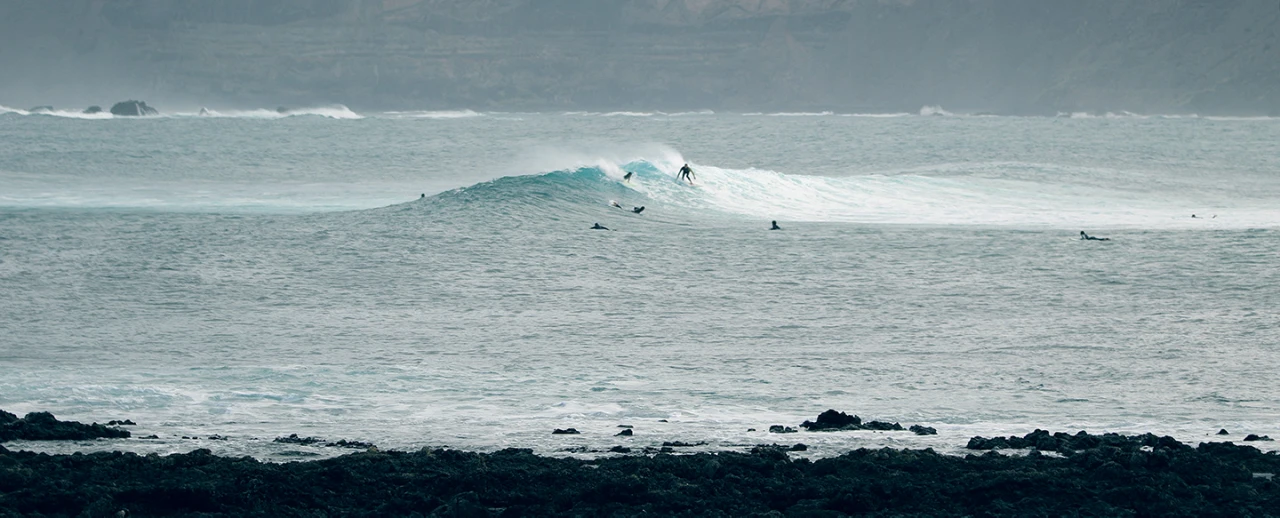
The island is famous among experienced surfers for heavy volcanic reefs on the north-west coast — spectacular to watch, and not where you learn. Beginners stay on the sand. Famara is a six-kilometre beach break under the cliffs of the Chinijo natural park, with shifting sandbanks, long whitewater on the inside and softer green waves further out once you are ready for them. That is the point: you can spend your first days in waist-deep water catching foam, then move a few metres further out as your level grows, without changing beach. For an overview of the island’s spots, read our surf guide to Lanzarote and the best beaches for beginners.

3. Consistent swell almost every day
Famara faces north-west, straight into the swells that the North Atlantic sends south all year. Flat days happen, but they are rare, and in a normal week there is something to surf every day. When the swell is too big for beginners on one part of the beach, the sandbanks along six kilometres always leave a softer corner, and the team chooses the section each morning according to size, tide and wind. You can check it yourself before you book on our Famara webcam or in the Famara spot guide.
4. A surf school that knows the beach
You can rent a board and try on your own, but in the first week a school makes the difference between struggling and surfing. At Red Star Surf our instructors are ISA-certified and trained as lifeguards; groups are normally up to five students per instructor (never more than eight); board, wetsuit and insurance are included; and all you need is to be able to swim 50 metres. Children can join from six years old.
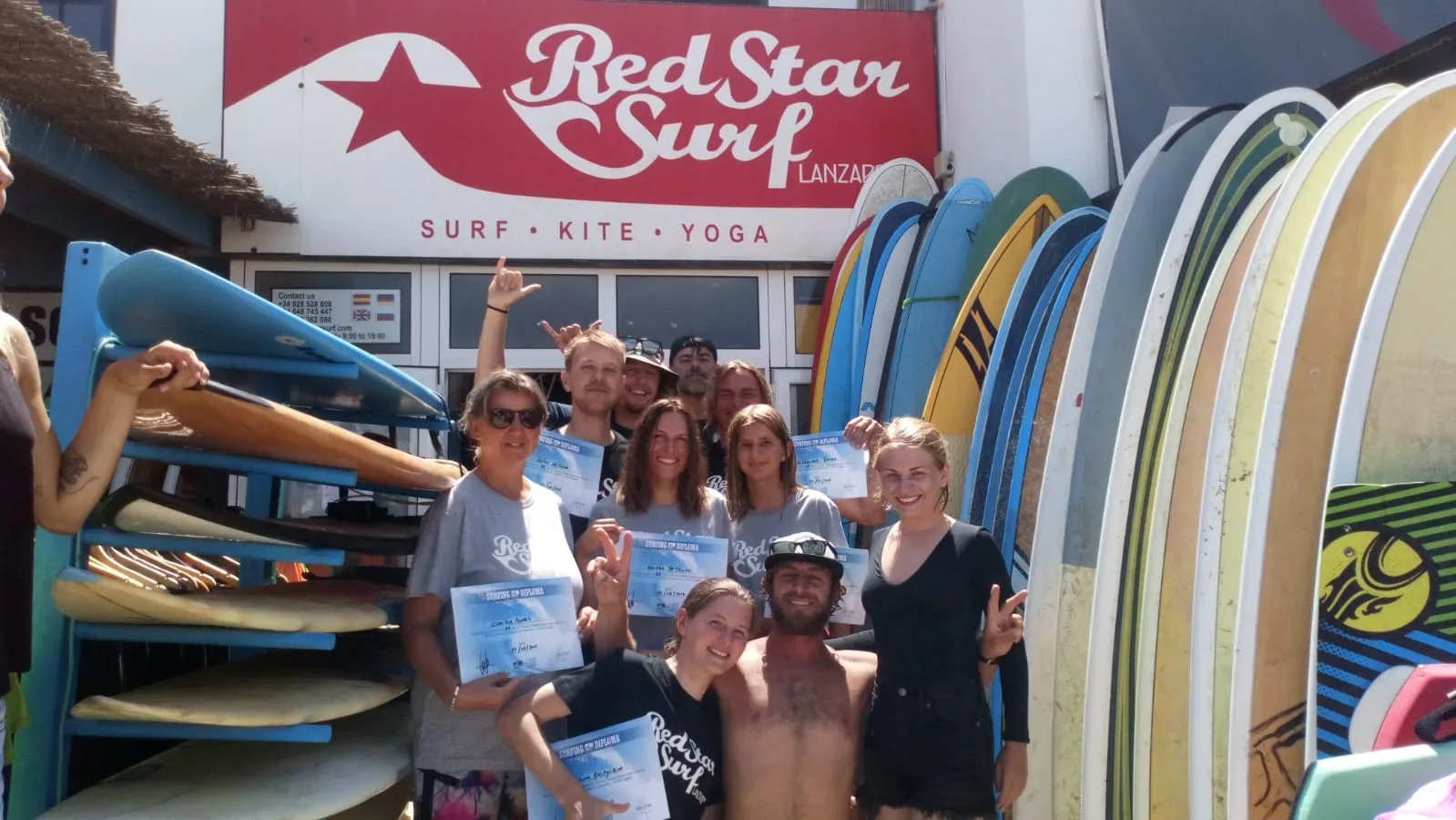
The options are simple. Beginner lessons run as a two-hour half day from €50 or a four-hour full day from €70, which includes hotel pick-up and daily video analysis. If you want the full experience, a surf camp package adds a private room in our surf house in the village — from €229 for three nights with two hours of lessons a day, or from €265 with four hours and video analysis. There is also accommodation in Caleta de Famara if you are travelling with people who do not surf.
5. Life off the board: simple, good value and beautiful
Caleta de Famara is a fishing village with sandy streets, a handful of restaurants serving fresh fish and papas arrugadas, and the cliffs turning red at sunset. Lanzarote is generally good value compared with mainland European surf towns in high season, and a week here does not need to be expensive — the money goes on surfing, not on nightlife. When you need a day off, the island has volcanoes, César Manrique’s architecture, wine in La Geria and quiet beaches: see things to do in Lanzarote and what to eat and drink. And if the summer trade wind gets you curious, Famara is also a kitesurfing spot.
Still comparing destinations?
If you are weighing Lanzarote against other places, we compared four very different spots — from the Canaries to the Arctic Circle — in learning to surf in Europe: where and when to go. And for a closer look at the village and the wave, read why Famara is one of Europe’s best surf destinations.
Learning to surf on Lanzarote — FAQ
Is Lanzarote good for beginner surfers?
Yes. Famara, on the north-west coast, is a long sandy beach break with gentle whitewater and water between 18 and 23 °C all year. Beginners learn on the sand, far from the reefs that make the island famous among experienced surfers.
What is the best time of year to learn to surf on Lanzarote?
You can learn all year. October to May brings the most consistent swell with mild weather; summer has smaller waves and windy afternoons, so lessons take place in the morning.
How much do surf lessons cost on Lanzarote?
At Red Star Surf in Famara, a two-hour beginner lesson starts from €50 and a four-hour day with hotel pick-up and video analysis from €70. Surf camp packages with accommodation start from €229 for three nights.
Where is the best place to learn to surf on Lanzarote?
Famara beach, in the Chinijo natural park, is the main beginner spot on the island: six kilometres of sand, swell on most days and space for everyone.


