Updated

Our favourite moment in a kite course is the look on a student’s face the first time the board starts to glide. For most people it happens around the third day. Here is what the days before it look like, how we keep them safe, and what you need to know before you book.
Day by day
Everyone learns at their own pace — we have seen people riding after a couple of hours and people who need a fourth day — but this is the usual path for a beginner group course.
| Day | What you learn | Where |
|---|---|---|
| 1 | wind window, safety systems, flying and steering the kite, relaunching it | on the sand and in shallow water |
| 2 | body dragging, controlling power with the bar, first contact with the board | in the water, in the lagoons at mid-tide |
| 3 | water start and your first metres riding | flat water in the kite zone |
| 4–5 | riding longer, controlling speed, first turns and going upwind | as conditions allow |
Safety comes first, every lesson
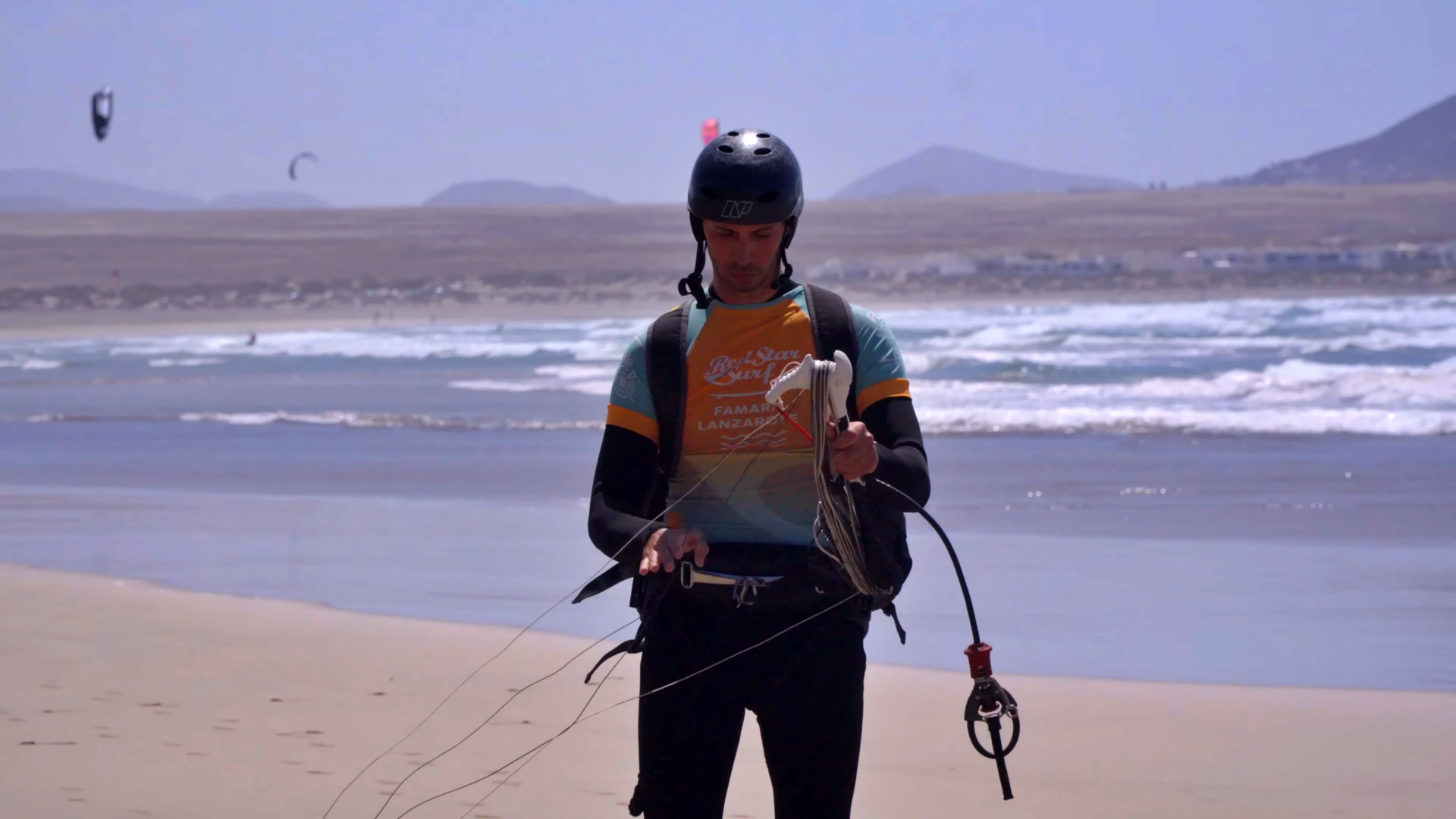
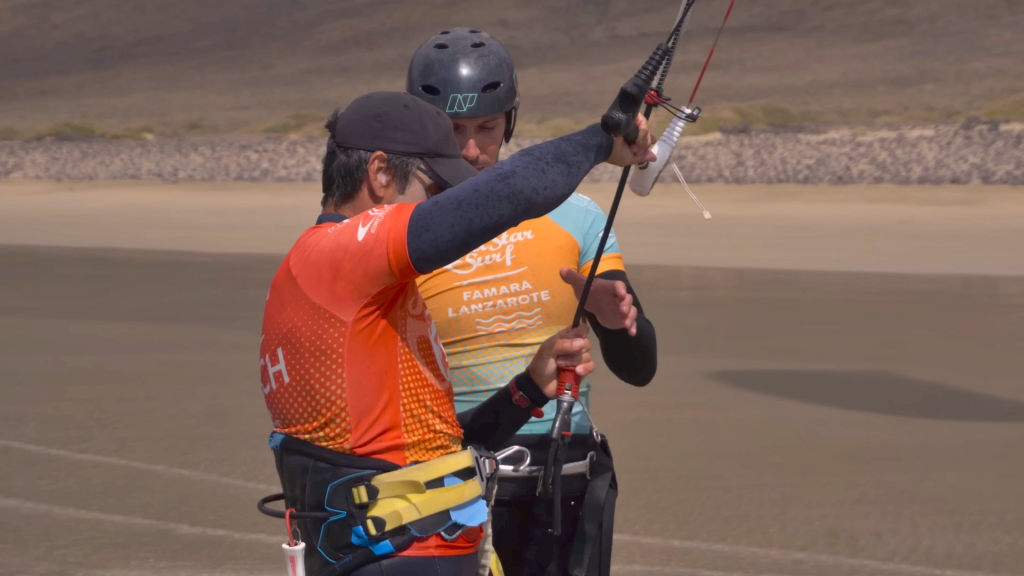
A kite is powerful, and learning to respect it is the first skill we teach. Every lesson includes drills where we rehearse the safety systems and practise the situations you might meet: releasing the power, relaunching from the water, self-rescue. You always ride with the school’s equipment, including a helmet, and your instructor stays with you in the water. The goal is simple: that you learn to predict what the kite will do before it does it.
Where and when the lessons happen
The lessons take place on Famara beach, but not in front of the village: kiting is not allowed from the village up to and in front of the Famara Bungalows, so the kite zone is the far part of the beach. We meet at our shop, collect wetsuits and helmets and drive there together. At mid-tide the beach forms shallow lagoons with flat water, which is ideal for your first rides; the small waves on the shore come later, when you are ready for them.

Kitesurfing depends on wind in a narrow range and a useful direction. From May to September the trade winds are the most reliable; the rest of the year good days come in bursts. We often move or cancel lessons when the wind is wrong — we would rather tell you the day before than waste your time on the beach.
Book your course
The kitesurf lessons page has current prices and availability: group lessons of three hours from €150 per day, private lessons from €190 and semi-private lessons for two from €290. For the full picture — the spot, the wind and how long it really takes to become independent — read our guide to kitesurfing in Famara. And if the wind does not show up, there is always a surf lesson the next morning.

Learning to kitesurf — FAQ
How long does it take to learn to kitesurf?
Most beginners ride their first metres on the board around the third day. Becoming independent — riding both ways and going upwind — usually takes several more sessions, depending on wind and practice.
Is kitesurfing dangerous for beginners?
With a certified school, the right equipment and a suitable spot, the risk is low. Every lesson in Famara includes safety drills, you always use the school’s equipment and helmet, and the instructor stays with you in the water.
What happens if there is no wind?
We move the lesson to another day or cancel it. Kitesurfing depends on wind in a narrow range, so we plan with the forecast and tell you in advance.