

Updated
You need far less to start surfing than the shop wants you to think. A board that floats you, a leash that keeps it with you, a wetsuit for the water you are in, wax so your feet stay put, and sun protection — that is the whole list. Here is what each piece does, which version a beginner actually needs, and what you can skip for now, from a school that puts a few thousand people on boards every year.
The essential surfing equipment at a glance
| Item | What a beginner needs | Included in a lesson | In our rental |
|---|---|---|---|
| Surfboard | soft-top 8′–9′, 70–90 litres | yes | yes |
| Leash | about the board’s length, ankle strap | yes | yes |
| Fins | the soft set that comes with the board | yes | yes |
| Wetsuit | 3/2 mm full suit Nov–May, shorty or lycra Jul–Sep | yes | yes |
| Wax | warm-water wax + comb (hardboards only) | — | yes |
| Sun protection | zinc stick, lycra or rash vest, reef-safe cream | bring your own | shop |
1. The surfboard
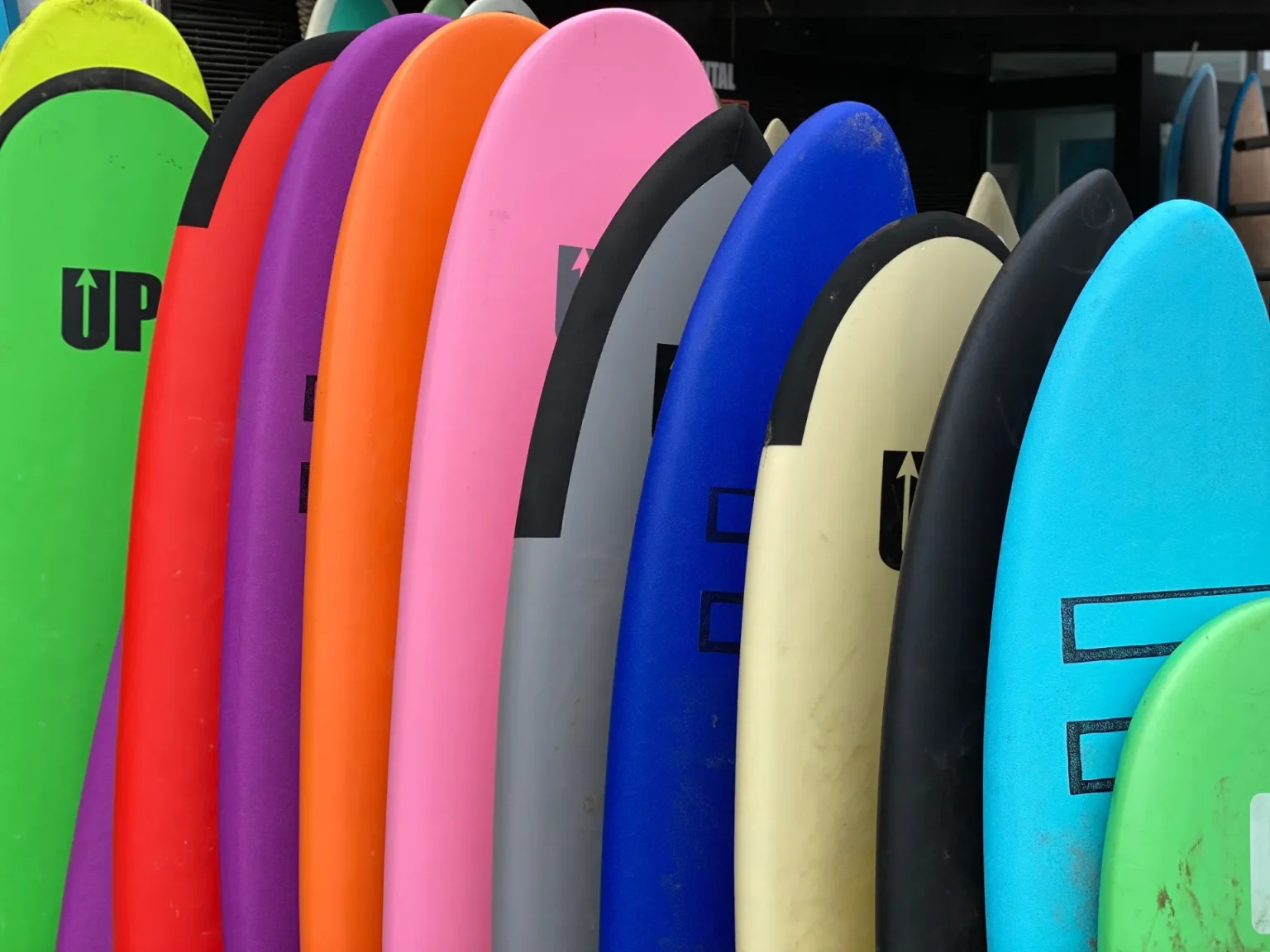
Everything starts here. A beginner board has one job: to float you high and stable so you can paddle easily and stand up with a margin for error. That means a soft-top (foamie) of 8 to 9 feet with 70 to 90 litres of volume for an average adult — the boards you see stacked outside every school in Famara. The foam deck forgives falls, the rounded nose forgives mistakes, and the length catches whitewater and small green waves that a shorter board would sink under.
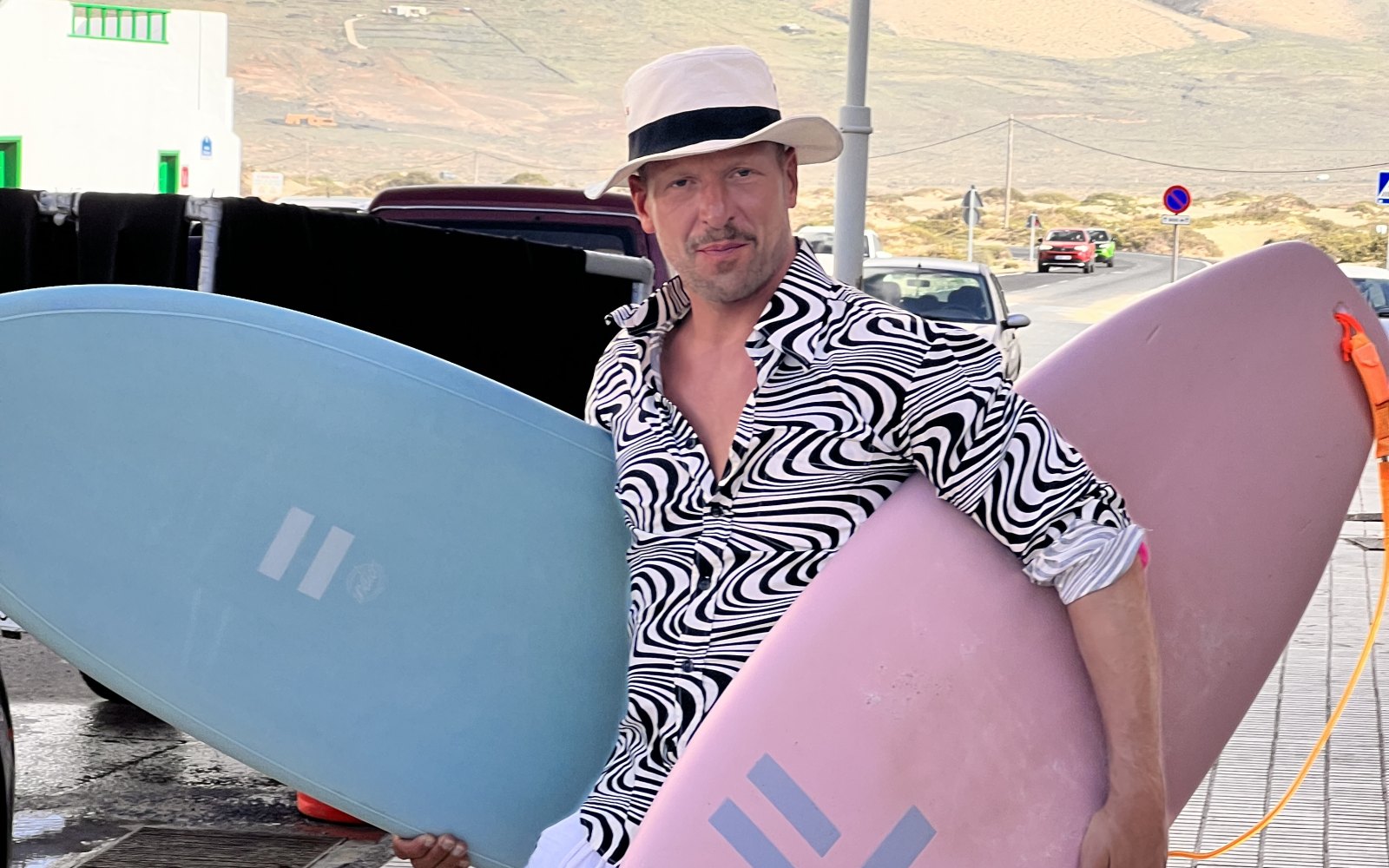
The most common mistake we see is a beginner who buys the board they want to ride in two years. A 6′ shortboard has about 28 litres of volume; a first-timer on one spends the session paddling for waves they cannot catch and never gets to the part where surfing is fun. Learn on a big board, move down in steps when the whitewater feels slow, and read our guide to choosing a surfboard before you spend money. Until then, a lesson or the rental shop gives you the right board for the day at a fraction of the price of buying one.
2. The leash
A leash — the locals call it the invento — is a urethane cord that connects your ankle to the board. It stops the board leaving after every fall, which saves paddling, but its real function is safety: a lost board in a two-metre swell is a nine-foot projectile for everyone inside you, and a board you can pull back to yourself is a flotation device. Choose one roughly as long as your board, attach it to the ankle of your back foot (the right foot for a regular stance, the left for goofy — our take-off post explains how to find yours), and check that the swivels turn freely so it does not wrap around your legs. One rule that costs nothing: never wrap the leash around your hand or wrist to pull the board in.
3. The fins
Fins give the board grip on the wave face and let you steer. Most boards run three (a thruster), some run one, two, four or five, and the shape, height and stiffness change how the board turns — which matters a great deal once you are on the open face and not at all on your first weeks in the whitewater. Soft-tops come with soft, flexible fins that will not cut you or the person next to you; keep them until you change boards. When you do move to a hardboard, the fin set that comes with it is right for the first year. The only thing to check is that they are screwed in tight before every session.
4. The wetsuit — what Lanzarote actually needs
A wetsuit is not about staying dry; it traps a thin layer of water that your body warms up. The right thickness depends entirely on the water temperature, and Lanzarote is easier than most places: the ocean sits between 18 °C in February and 23 °C in September, so a 3/2 mm full suit covers the whole winter and a shorty or a simple lycra does the summer. No boots, gloves or hood, ever. We wrote up the numbers month by month in why winter is the best season to surf here.
| Months | Water | What to wear |
|---|---|---|
| Nov–May | 18–20 °C | 3/2 mm full suit |
| Jun & Oct | 20–22 °C | 3/2 or 2 mm shorty |
| Jul–Sep | 21–23 °C | 2 mm shorty or lycra |
Fit matters more than brand: a suit should feel tight when dry and have no gap at the neck, lower back or wrists where water can flush through. If you are between sizes, go smaller. A lesson and a rental include the suit, so you can try a couple of sizes before you ever buy one.
5. Wax and grip
Wax is what stops your feet sliding off a fibreglass deck. You apply a hard basecoat once, then a softer top coat in a temperature grade that matches the water — for Lanzarote that is “warm” wax (roughly 19–24 °C) most of the year and “cool” only in the coldest weeks. Rub it on in small circles until it beads, add a fresh layer before each session, and scrape and reapply when it goes grey and flat. A wax comb is the two-euro tool that does the scraping. Soft-tops usually need no wax at all, and a tail pad (traction pad) replaces wax under your back foot on a shortboard, which is another decision for later.

6. Sun protection and the small things
The Canary sun at midday in the water is stronger than anything a normal beach day prepares you for, and in summer you will spend two hours in a lycra with your face up. A zinc stick for nose, cheeks and lips, a long-sleeve lycra or rash vest, and a reef-safe cream for the back of your hands are not optional. After that, the list is short: a towel or a changing poncho, a litre of water, flip-flops for the hot sand, and if you are travelling with your own board, a padded board bag — airlines and rental cars are not kind to fibreglass. Ear plugs are worth it if you surf a lot in winter; a waterproof watch for the tide is nice but your phone and the beach notes for beginners do the same job.
What you don’t need yet
A new hardboard, a second wetsuit, a GoPro, booties, a hood, a surf watch, a bag full of fin sets. All of these have a place in the sport, and none of them helps you stand up faster in your first month. The single biggest upgrade a beginner can buy is not equipment at all — it is a lesson with someone who reads the ocean for you while you are busy learning to pop up.
Rent, borrow or buy?
Every beginner lesson and every surf camp week includes the board, wetsuit and leash, chosen for you each morning by size and conditions. If you already surf, the rental shop in the village lets you ride a different board every day for the price of a couple of coffees. Buy your own when you know which board you keep coming back to — that usually happens somewhere in the second or third week of surfing, not before the first.
Surf equipment — the questions we get
What surfboard should a beginner start on?
A soft-top of 8 to 9 feet with 70–90 litres of volume for an average adult. It floats high, paddles easily and forgives mistakes. Move to a smaller board only when whitewater and small green waves feel easy.
Do I need a wetsuit to surf in Lanzarote?
From November to May, yes — a 3/2 mm full suit for 18–20 °C water. In July–September a 2 mm shorty or a lycra is enough. Boots, gloves and hoods are never needed here.
Is surf equipment included in a lesson?
Yes. Board, wetsuit and leash are included in every lesson and surf camp at Red Star Surf, chosen for your size and the conditions of the day. You only need swimwear, a towel and sun protection.
What is the most important piece of surf equipment for safety?
The leash. It keeps the board attached to you so it cannot hit other surfers and so you always have something to float on. Check it for cuts before each session and never wrap it around your hand.


